

Finding types
Titles come from the provider’s pack. Observations with the same type and event type merge into one finding, with every delivery as evidence. Info findings appear at most once per run.
Severity
Late is High, not Critical: a stale delivery is one the provider really signed, so the worst outcome is a genuine event processed again, which is the same class as a duplicate.
What a finding contains
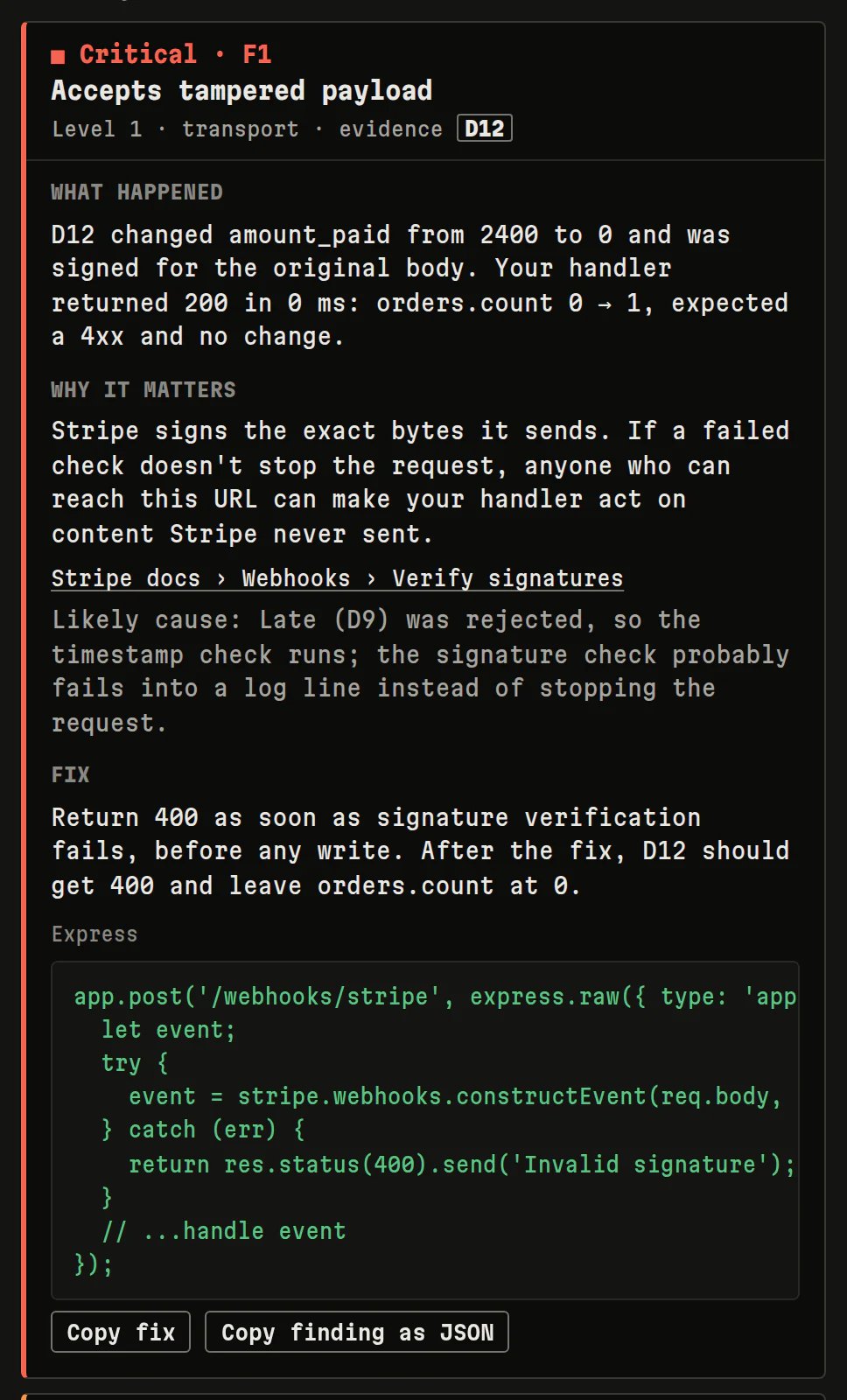
A finding: level, evidence, what happened, why it matters, likely cause and fix.
- Level 1 (judged on status and latency) or 2 (judged on a probe reading), and the evidence deliveries.
- What happened, with the measurements.
- Why it matters, with a link to the provider’s docs.
- Likely cause, only when the run’s own results show it. For example: Late was rejected, so the timestamp is checked, but Tampered was accepted, so the signature check probably fails into a log line.
- Fix: one instruction and what the next run should show. For Express, Next.js route handlers and Laravel, some findings come with a code snippet.
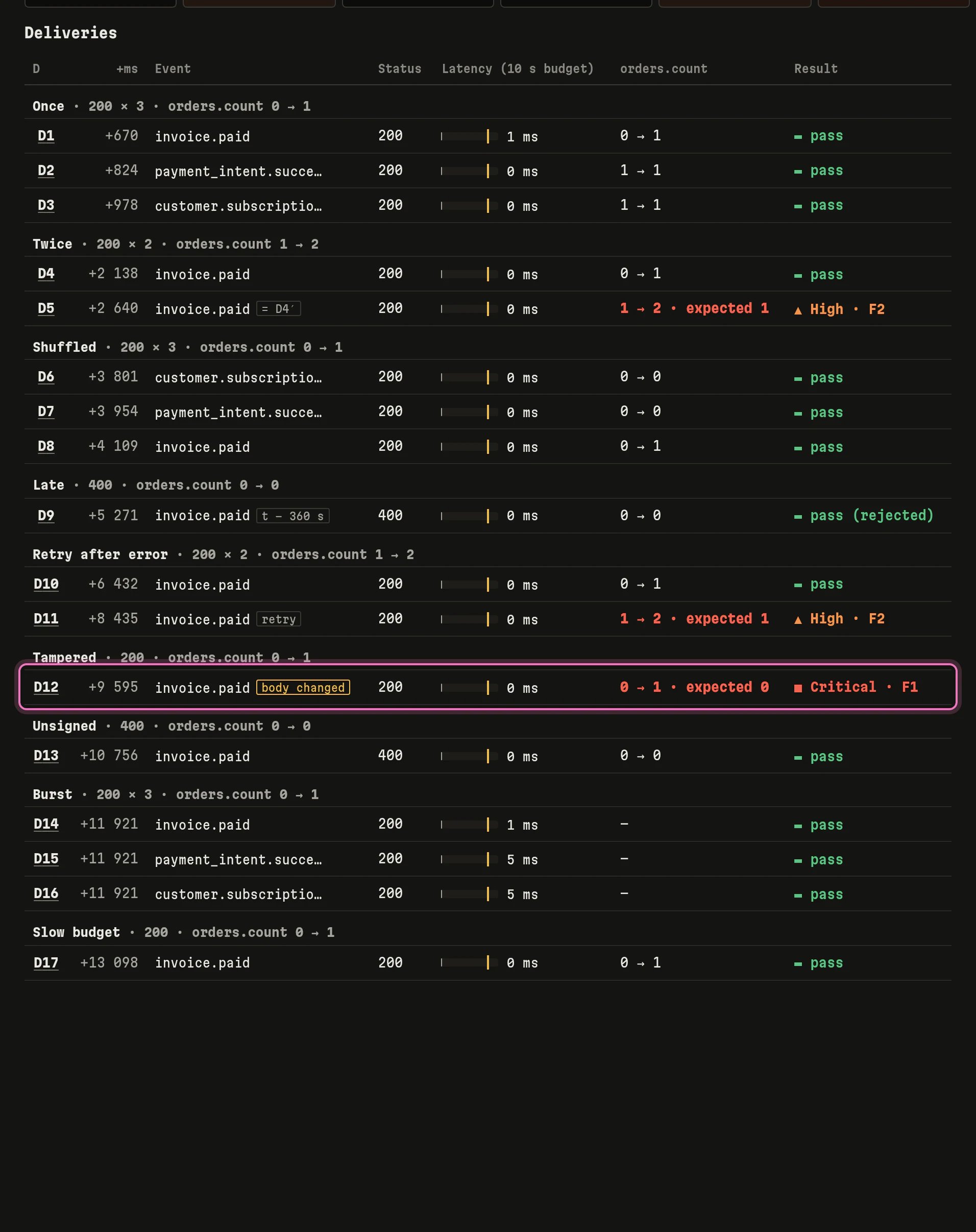
Deliveries of a run. D12, the tampered delivery, is the evidence for F1.
Run status
The first matching row is the status.
The verdict line: status, counts and the exit code CI would get.
Exit codes
The rows are checked top to bottom:
2 wins over 1, because a run that didn’t finish shouldn’t be read as a full verdict. A run started from the browser shows the exit code it would have had with --fail-on high, or with the level picked in Fail the run on.